theory+
practice+
context+
reflection
Why Teach
Theater education is not a part of the national curriculum of my native Guatemala City, so if it weren’t for the teachers who knew of its importance and snuck plays on to our literature curricula, I would have never known the power it holds. I have also been exposed to multiple cross-cultural educational environments through scholarships (in rural India, rural Guatemala, rural Maine, central Texas), internships (Italy) or self-designed residencies (Portugal). I have a keen sense of how education can shape what we believe ourselves capable of, and hence what we believe the world could look like.
Course and Lesson Design
Guided by the principles of Understanding by Design (Wiggins and McTighe), Critical Pedagogy (Freire), Black Feminist Pedagogy (hooks) and Drama-Based Pedagogy (Dawson), my courses are built from a question that we keep returning to throughout the course –as per the UbD framework–. Every theoretical and practical angle we approach it from seeks to instill a sense of the political context that informs the practice –as per critical pedagogy–, and questions whose voices and experiences this practice traditionally centers –as per black feminist pedagogy–. As a form of praxis and multi-modal meaning-making that does not rely solely on verbal/linguistic forms of processing the material, I design differentiated lesson plans that engage the students wholistically –as per Drama-Based Pedagogy.
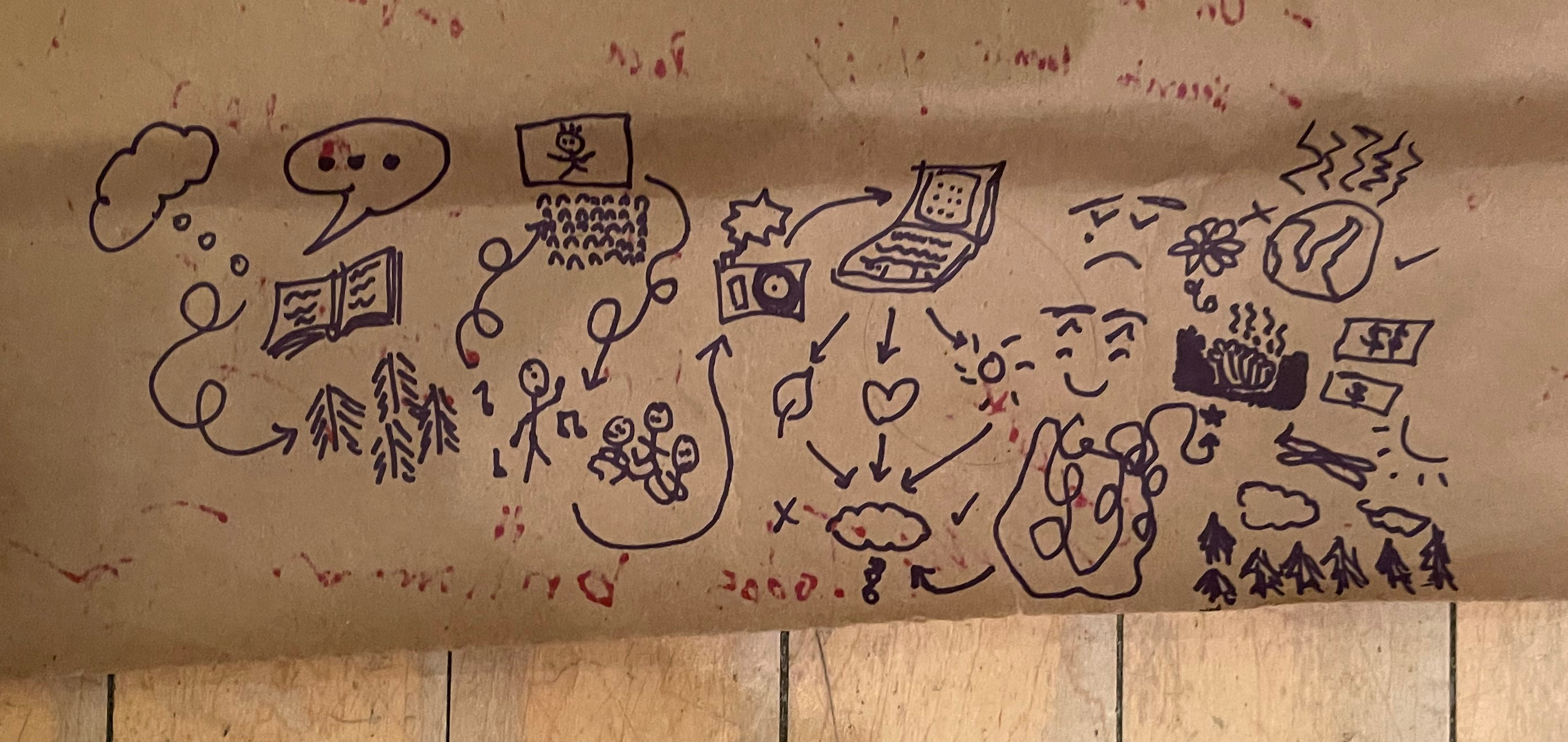
As an example, in my Performance and Ecology class, the central class is “What Can Theatre Do about Environmental Issues?”1 I guide the students to develop a shared diagram that represents an answer to that question at the beginning of the class. The diagram below contains drawings and verbs that articulate the many things that theater can “do”, but also drawings that represent the four steps of our mental model: an audience attends to show, they have an embodied experience or exchange with the performance, then .. “something happens”, and then the audiences are able to go out into the world.

The course then takes students through a range of aspects of theater-making: story (as constituted by playwriting, dramaturgy and directing, but also eco-criticism), performance (as constituted by movement and acting), design (as constituded by objects/masks/puppets/props, intentional shaping spaces, lighting and sound) and company structure (seen through the lens of devised collectives, intergenerational performance troupes, and theories of collaboration).
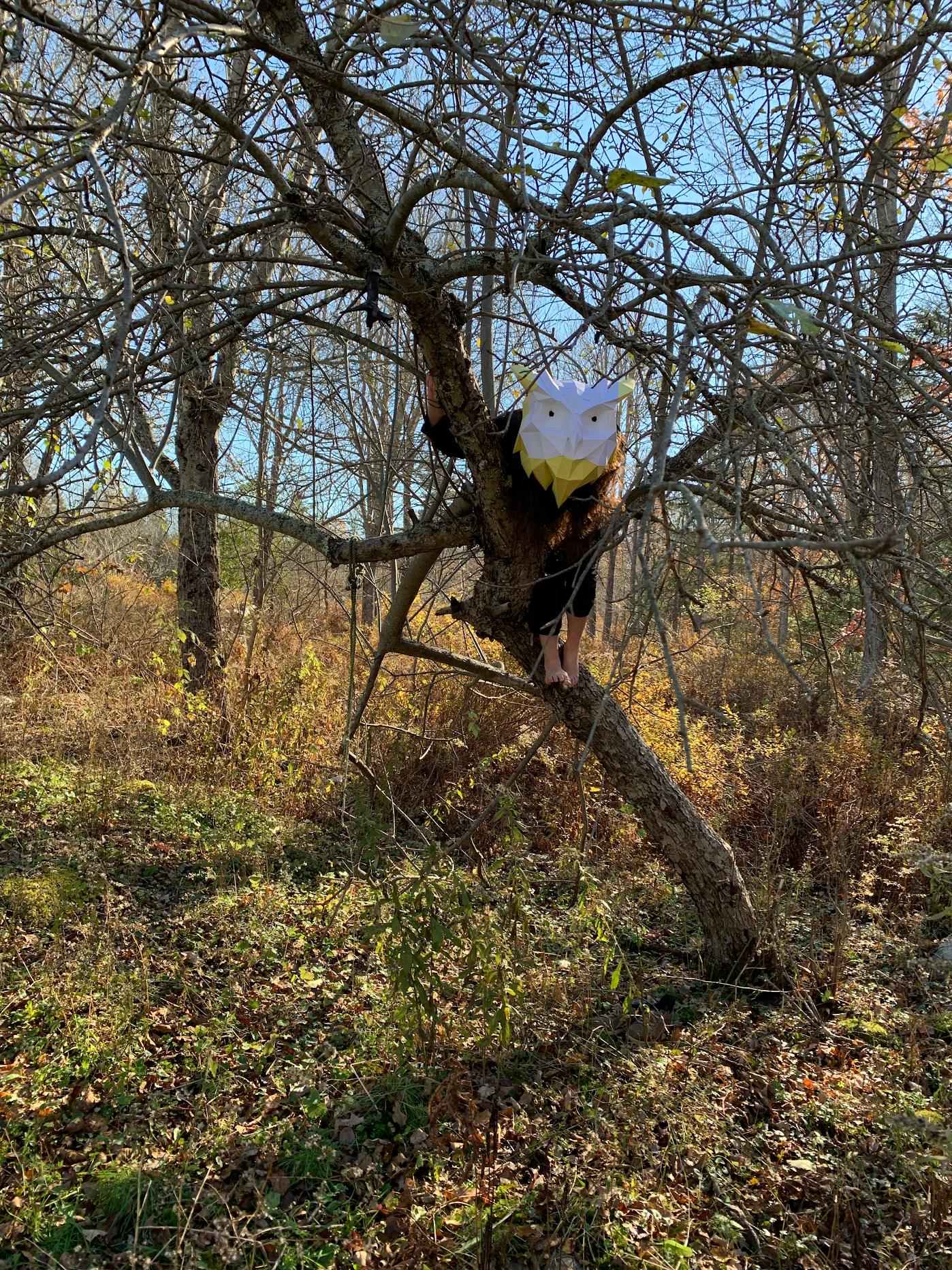

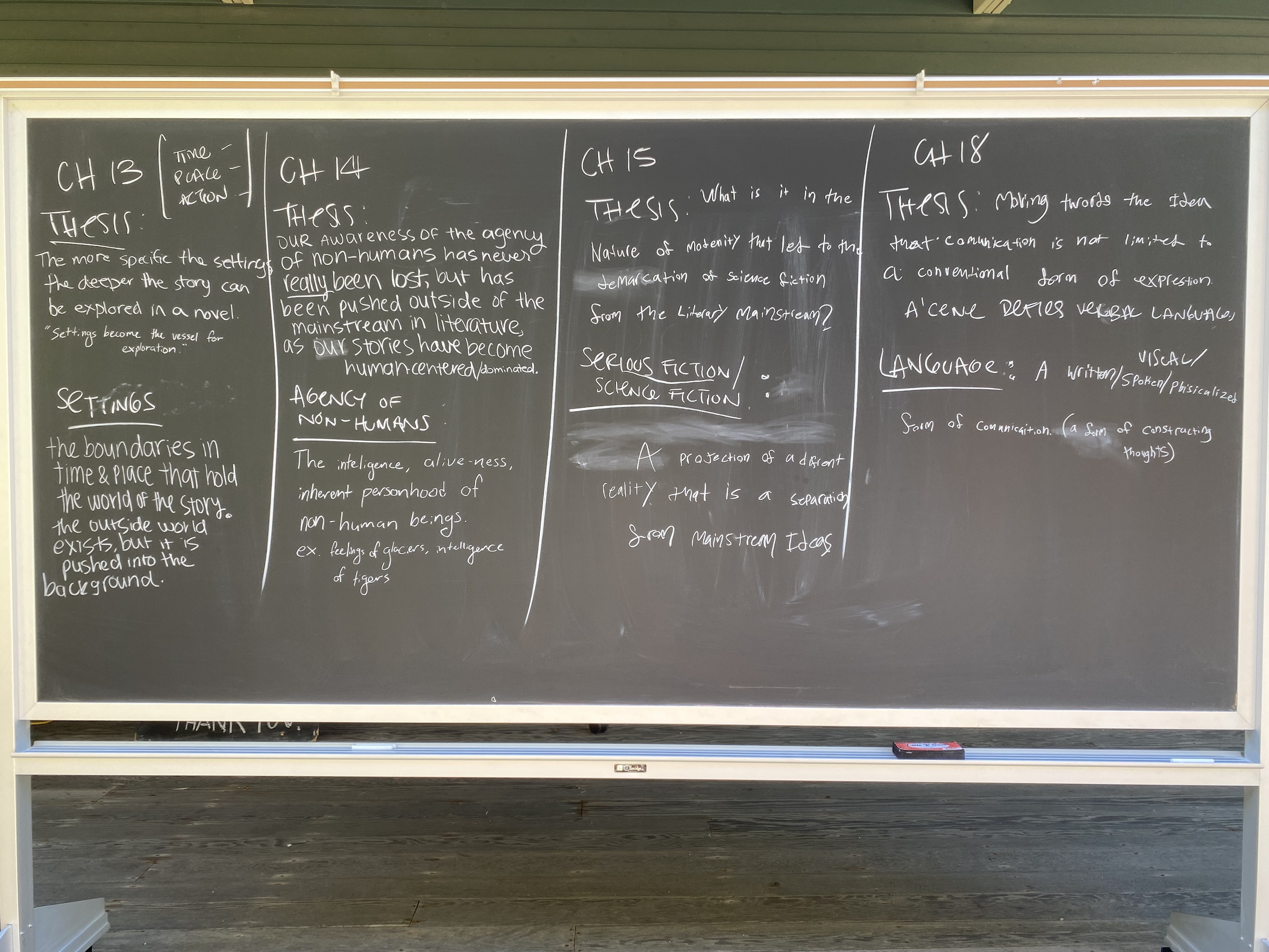
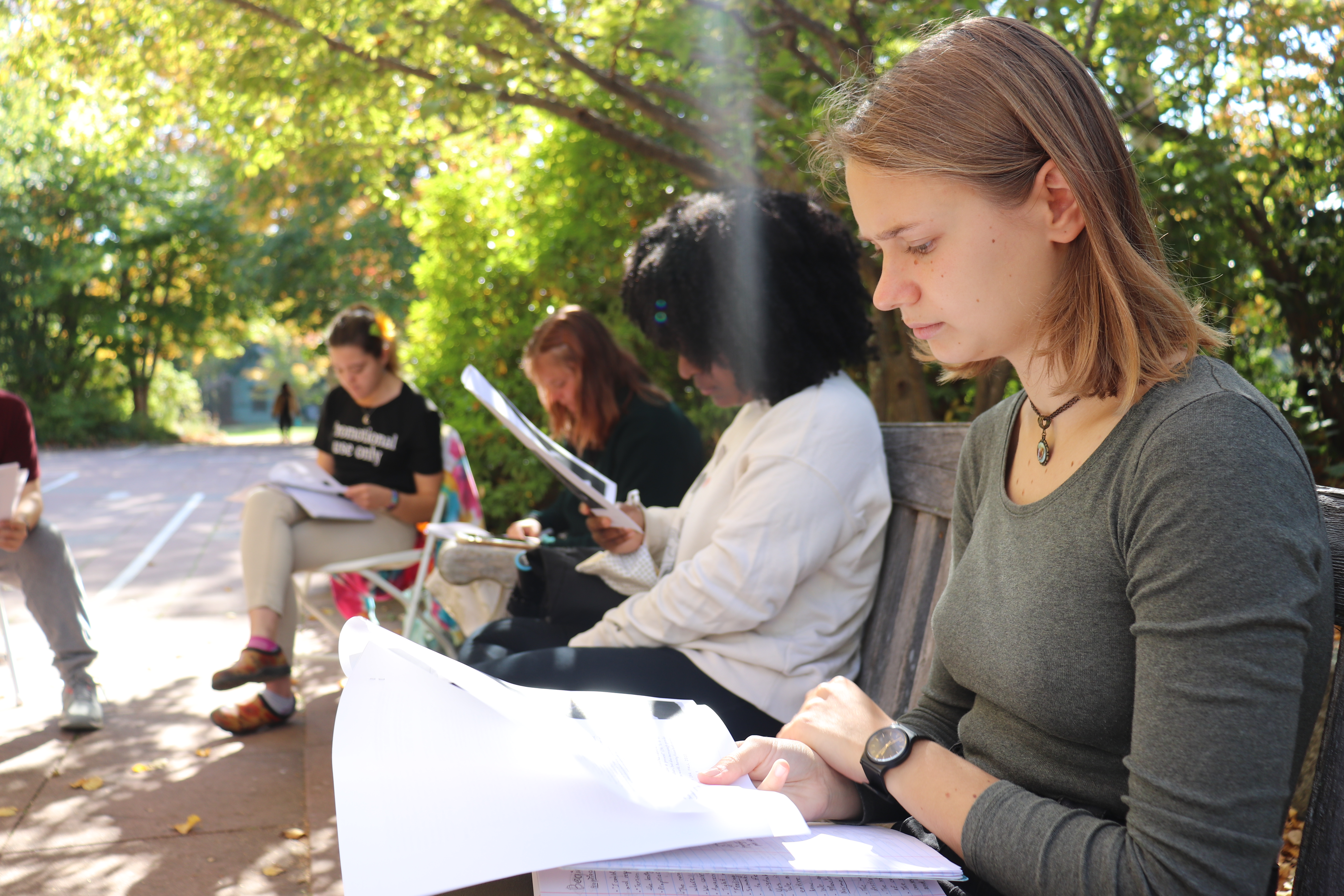
Each of these realms takes students through a series of provocative questions –”how might stories shape the land?”–, hands-on activities –”re-perform a section of Oklahoma! to undermine its political support to Manifest Destiny –, and reflective questions –”what do stories do?”–.

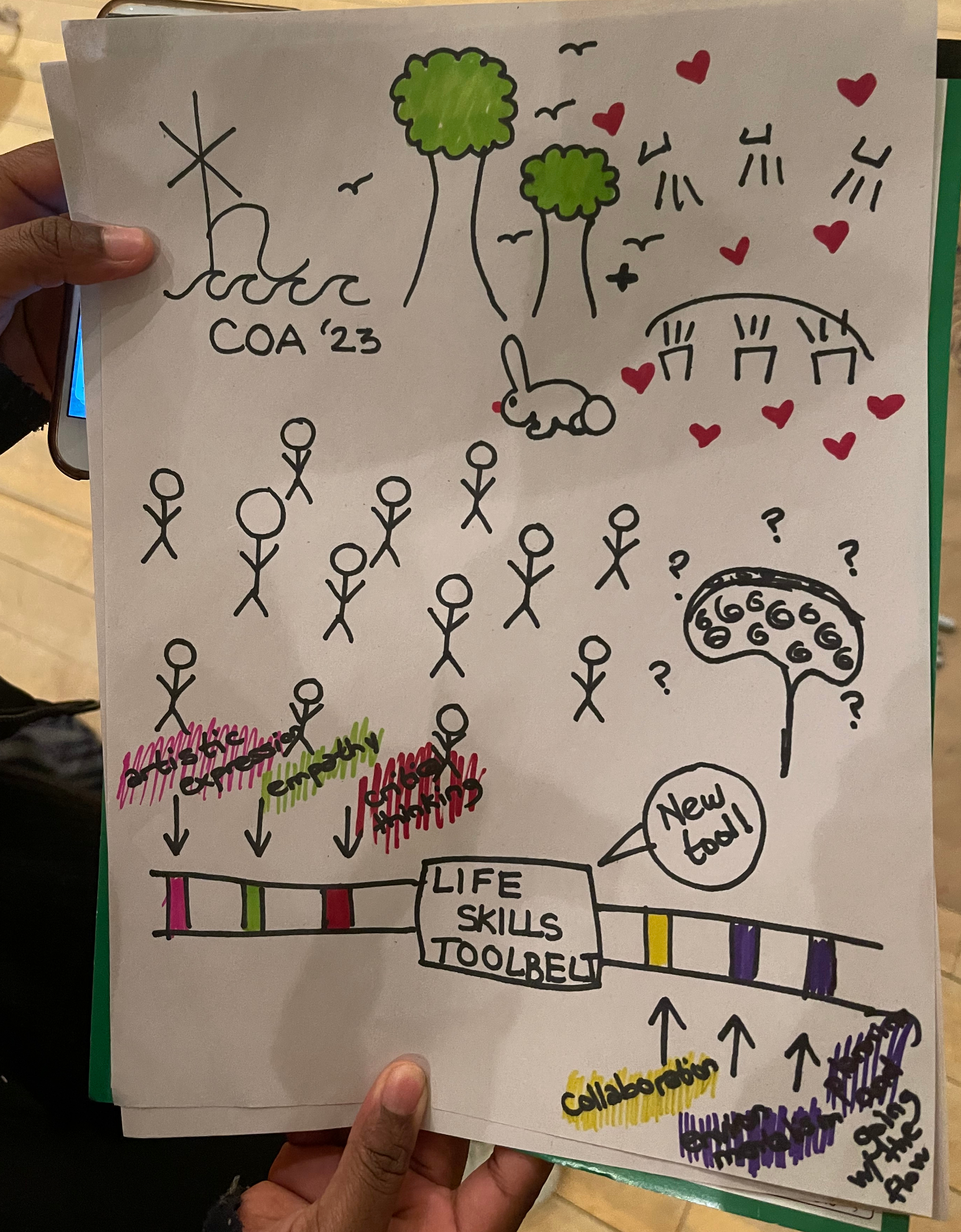

By the end of the course I support the students as they map their journeys through the semester, using the Journey Map drama-based strategy. Upon reflecting on their maps, they are asked the question that brought us to the class: “What can theater do for the environment?”. One of the answers was “what can’t it do?”, another was “it depends on where, with whom and how we want to use it to intervene.”
- Taken from Carl Lavery’s provocative title for an edited volume.Higher Education ↩︎
 khristián méndez aguirre