This was my first peer-reviewed publications, and performs an ecodramaturgical analysis of VAMPYR by Manuela Infante to theorize what eco-theater might do in the 21st century if it goes against its tendencies to rely on science and naturalism.
It was published in July 2026, as part of Volume 36, No. 2 of Theatre Topics, as part of a special issue “Theater In Extremis,” edited by Brian D. Valencia and Bryan Vandevender.
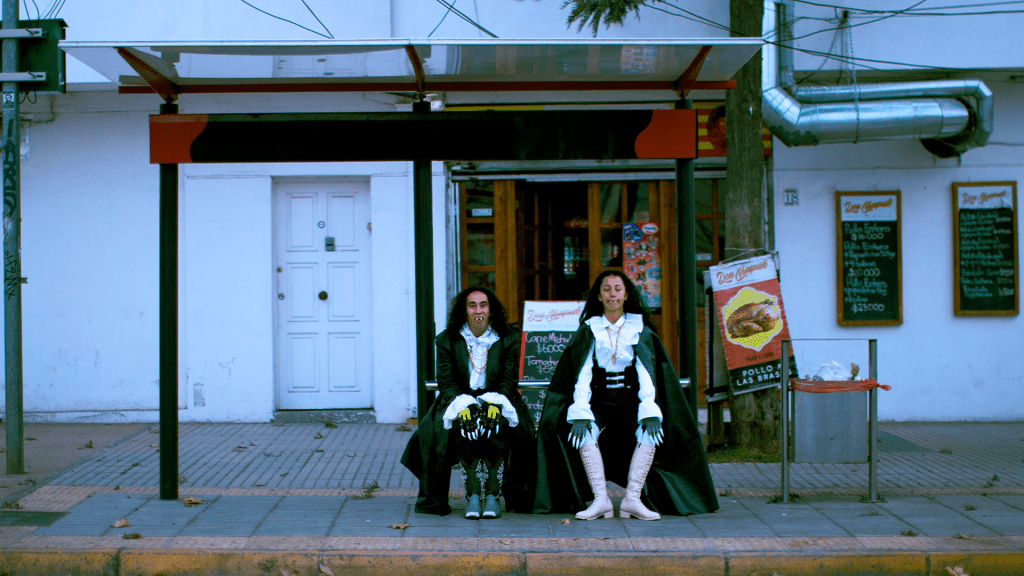
Abstract. This article theorizes “unnaturalist” ecotheatre as a mode of performance that situates its environmental critique within the contingent, embodied nature of environmental knowledge, rather than relying exclusively on scientific epistemology. Drawing on an ecodramaturgical analysis of Chilean writer-director Manuela Infante’s VAMPYR (2024), it identifies three tenets of unnaturalist ecotheatre: 1) destabilizing otherwise “natural” categories; 2) treating science and positivism as two organizing logics among many; and 3) expanding epistemic registers into feeling and embodiment to reveal hidden forms of power. It argues that VAMPYR’s assemblage
of Gothic mythology, biological evidence, and labor exploitation circumvents the conventions of naturalist ecotheatre, which tend to ground dramatic conflict in scientific knowledge while reinforcing individualism and obscuring systemic causes. Unnaturalist theatre, this article proposes, can make sense of environmental degradation where science, policy, and activism cannot.
Project Origins
I almost didn’t write this paper, mostly because I could not figure out how the Call For Papers, rooted in Baz Kershaw’s “Theater Ecology” uses the term “in extremis” to describe a text or performance tradition that has reached the “end of its tether” and, therefore, requires extraordinary measures to “preserve it, restore it, or connect it to some other more urgently meaningful domain” (58).
To me, Manuela’s work represented this, and I felt like there was something interesting in using a vampire, which does not die easily, to breathe new life into a genre that can also be very stale.
Timeline
I traveled to Santiago in October of 2024, to write a review of VAMPYR for Theatre Journal, and I used some of my preliminary notes in the conclusion to my dissertation.
I wrote the first draft over the course of a week, right before the deadline, and spent much of February-May 2026 revising it in conversation and under the editorial guidance of Brian D. Valencia, in particular.
 khristián méndez aguirre
Leave a comment